Nintendo Switch 2 Announcement: Powerful Hardware at a High Price – But Is It Enough?

Posted by admin on April 05, 2025
Articles, Games, News / No Comments

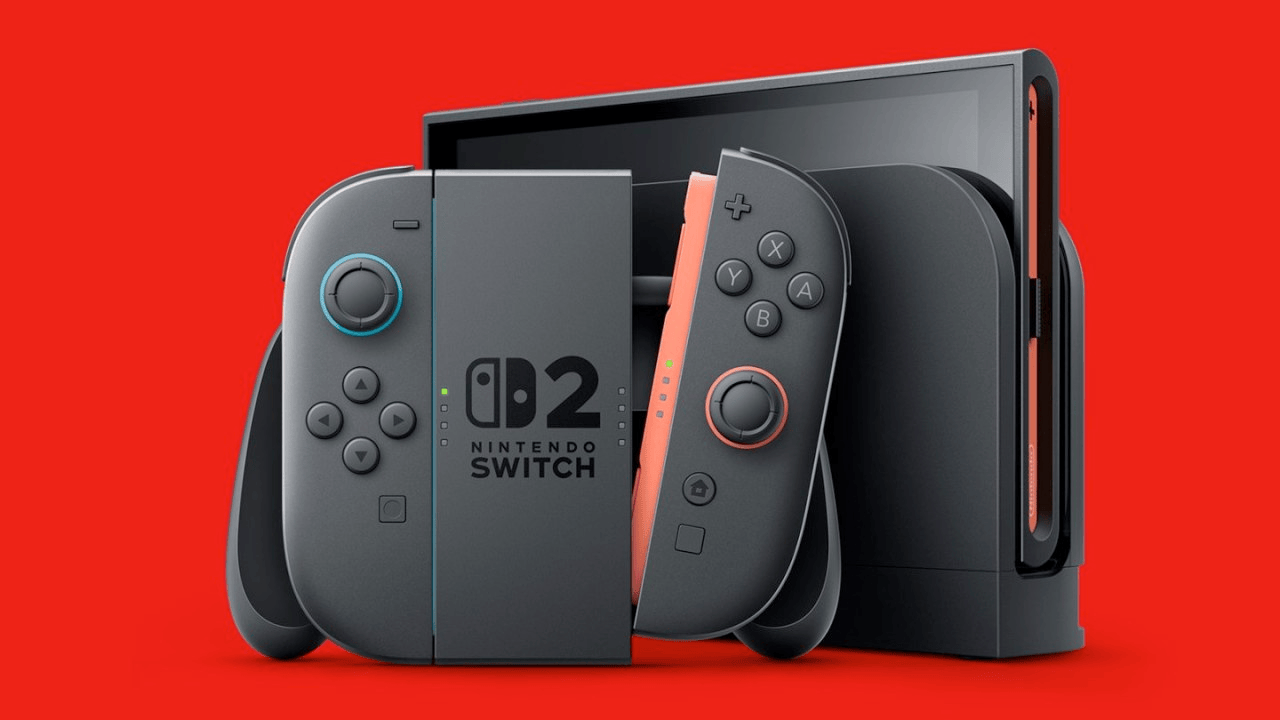
After years of speculation, Nintendo has finally lifted the curtain on the long-awaited Nintendo Switch 2. While the reveal has sparked excitement thanks to its much-improved hardware, the announcement has also been met with raised eyebrows,mostly due to its steep price tag, some surprising downgrades, and questions about whether it’s truly a next-gen leap or just a more expensive refresh.

A Powerful Machine, At a Price

On paper, the Switch 2 is a beast compared to its predecessor. It boasts a faster custom Nvidia chip, improved graphics capabilities, and support for 4K resolution in docked mode. The display is a 7.9-inch 1080p LCD screen with 120Hz refresh rate, offering fluid visuals whether you’re racing in Mario Kart World or exploring vast open worlds. The new Joy-Con 2 controllers feature magnetic attachment, enhanced haptics, and built-in sensors that mimic the precision of a mouse.

However, all this power comes with a hefty cost. The console launches at $449.99, a full $150 more than the original Switch at launch. And it doesn’t stop there,first-party games now retail for up to $80, a significant bump in price that’s likely to frustrate longtime Nintendo fans used to more accessible pricing. In the US, Nintendo was also forced to delay the pre-launch in order to reevaluate the price (aka raise it) for US customers due to the US administration tariffs.

Feels Like a “Pro” Update – 10 Years Later

Despite its solid tech specs, the Switch 2 has drawn comparisons to mid-generation console refreshes like the PS4 Pro or PS5 Pro, systems that offer more horsepower but don’t fundamentally change the gameplay experience. The problem here is that this isn’t a mid-gen update. It’s been over seven years since the original Switch, and for many fans, it’s felt like a decade-long wait for something truly revolutionary.

Instead, what we’ve received is an upgrade that improves visuals and performance, but retains much of the original’s DNA. The design is familiar. The user interface reportedly stays largely the same. And although backward compatibility is a welcome feature, it reinforces the idea that the Switch 2 isn’t a radical departure, but a continuation.

Downgrades That Raise Eyebrows

Perhaps the most puzzling choice Nintendo made was reverting to an LCD screen after the success and visual quality of the OLED model released in 2021. While the company claims the LCD is brighter and supports higher refresh rates, many fans see it as a step backward in terms of contrast and color vibrancy.

Even more concerning is the battery life. Nintendo’s official figures suggest a range of 2 to 6.5 hours, a drop from the 4.5 to 9 hours offered by the revised Switch and the OLED model. For a hybrid console designed for on-the-go play, that’s a hard pill to swallow, especially when you’re paying a premium.

A Hard Sell for Families

One of the Switch’s greatest strengths was its universal appeal, particularly to families. It was affordable, portable, and easy to understand. The Switch 2, by contrast, struggles to justify its existence to more casual users, especially parents whose kids already own the original console.

With a similar look and feel, parents might not see any reason to upgrade, especially at nearly $500 before even factoring in the cost of games and accessories. Nintendo has done little so far to differentiate the Switch 2 in terms of exclusive experiences or must-have features, which may slow adoption outside the enthusiast crowd.

Physical Games, Digital Frustrations

Adding to the controversy is Nintendo’s new approach to physical game distribution. Some titles will now ship on “Game-Key Cards”, essentially empty cartridges that function as download codes. For collectors and those with spotty internet connections, this is a frustrating shift. It blurs the line between physical and digital ownership and removes one of the biggest conveniences of owning a physical copy: instant, offline access.

While this strategy likely helps reduce production costs and accommodates larger game sizes, it risks alienating a part of Nintendo’s fanbase that values the tactile and collectible nature of physical media.

So what are your thoughts on this? Are we looking at the repetition of the original Switch’s success or another WiiU moment for Nintendo?

Learning to Learn: Mastering the Most Valuable Skill of All

Posted by admin on March 30, 2025
Articles, Workplace / No Comments

In an age of rapid technological advancement and constant change, the ability to learn how to learn is arguably the most valuable skill a person can possess. While traditional education often emphasizes the memorization of facts or the mastery of specific disciplines, the real edge comes from understanding how to adapt, absorb new knowledge efficiently, and grow from it. So what does it truly mean to learn how to learn, and how can we cultivate this powerful ability?

The Meta-Skill of Lifelong Learning

Learning how to learn is a meta-skill, a skill that supports the acquisition of other skills. It involves not just consuming information, but knowing how to find it, how to process it, how to retain it, and how to apply it. It means understanding your own learning style, recognizing obstacles, and using techniques that optimize comprehension and memory.

This kind of learning is lifelong. It’s what enables a software engineer to pick up a new programming language, an entrepreneur to grasp new markets, or a retiree to learn the piano. The world doesn’t stand still, and neither should we.

Key Principles of Learning to Learn

  • Active Learning Beats Passive Learning

Simply reading or listening isn’t enough. Active learning involves engaging with the material, asking questions, summarizing, teaching others, and testing yourself. This engagement helps to create stronger memory traces and deeper understanding.

  • Spaced Repetition and Memory Optimization

Revisiting information over increasing intervals (spaced repetition) is one of the most efficient ways to commit it to long-term memory. Apps like Anki use this principle to help people master complex subjects efficiently.

  • Interleaving and Contextual Learning

Mixing different topics or problem types (interleaving) during study sessions, instead of focusing on just one, has been shown to improve retention and adaptability. Real-world learning rarely happens in silos, our study habits should reflect that.

  • Metacognition: Thinking About Thinking

Being aware of your own understanding and learning processes, knowing what you know and recognizing what you don’t, is a cornerstone of effective learning. This self-awareness helps you adjust your strategies and focus on areas that need attention.

  • Growth Mindset and Embracing Failure

Coined by psychologist Carol Dweck, a growth mindset is the belief that abilities can be developed through effort and learning. Mistakes aren’t setbacks, they’re stepping stones. Adopting this mindset transforms challenges into opportunities.

Tools and Techniques

Note-taking Systems: Methods like the Cornell system or Zettelkasten help organize and connect ideas.

Mind Mapping: Visual representations of concepts can enhance memory and foster creativity.

Teaching Others: Explaining what you’ve learned to someone else, often called the Feynman Technique, reveals gaps in understanding and deepens knowledge.

Digital Resources: Platforms like Coursera, edX, and Khan Academy offer structured paths to learn virtually anything.

Adapting in a Changing World

In the modern workforce, adaptability is crucial. Entire industries are being reshaped by automation and AI, and the most in-demand jobs tomorrow may not exist today. Those who thrive are not those who know the most, but those who learn the fastest.

This applies not just to careers, but to life in general. Whether you’re switching roles, learning a new language, exploring a hobby, or recovering from setbacks, learning to learn empowers you to take control of your growth.

Understanding the Different Types of Artificial Intelligence: From Weak AI to General AI

Posted by admin on March 29, 2025
AI, Articles / No Comments

Artificial Intelligence (AI) is transforming the world, from everyday apps on our phones to complex systems driving innovation in science, healthcare, and business. But not all AI is created equal. In fact, AI can be categorized into different types based on its capabilities and how it functions. The two broad categories often discussed are Weak AI and General AI—but there’s more to the story. Let’s break down the main types of AI and what they mean for our future.


1. Weak AI (Narrow AI)

Definition: Weak AI refers to systems that are designed and trained for a specific task. These systems operate under a limited set of constraints and do not possess consciousness, understanding, or genuine intelligence.

Examples:

  • Voice assistants like Siri or Alexa
  • Recommendation algorithms on Netflix or Amazon
  • Image recognition software
  • Spam filters in your email

Key Characteristics:

  • Task-specific
  • No self-awareness
  • Cannot perform outside its programmed domain

Weak AI is the most common type of AI in use today. It can outperform humans at specific tasks but only within its programmed boundaries.


2. Strong AI (General AI)

Definition: Strong AI, also known as Artificial General Intelligence (AGI), is a theoretical form of AI that can understand, learn, and apply intelligence across a wide range of tasks—just like a human being.

Examples: None exist yet. AGI remains a goal of advanced AI research.

Key Characteristics:

  • Human-like cognitive abilities
  • Can transfer knowledge across domains
  • Possesses reasoning, problem-solving, and self-awareness

AGI would be able to perform any intellectual task that a human can, from solving math problems to composing music, without being specifically programmed for each task.


3. Superintelligent AI

Definition: This is a hypothetical future form of AI that surpasses human intelligence in all respects—creativity, decision-making, emotional intelligence, and more.

Examples: Purely speculative at this point. Often portrayed in science fiction (e.g., HAL from 2001: A Space Odyssey, or the AI in Her).

Key Characteristics:

  • Exceeds human intelligence
  • Potentially self-improving
  • Raises ethical and safety concerns

Superintelligent AI is the subject of intense debate among experts, as it could bring both unprecedented benefits and existential risks.


4. Reactive Machines

Definition: These are the most basic type of AI systems. They can react to specific inputs but do not store memories or learn from past experiences.

Example: IBM’s Deep Blue, the chess-playing computer that beat Garry Kasparov in 1997.

Key Characteristics:

  • No memory
  • No learning capability
  • Purely reactive

5. Limited Memory AI

Definition: These systems can use past experiences to make better decisions. Most current AI models, including those in self-driving cars, fall into this category.

Example: Autonomous vehicles that observe other cars, speed limits, and road conditions to make driving decisions.

Key Characteristics:

  • Can learn from data
  • Short-term memory
  • Requires ongoing training

6. Theory of Mind AI (Experimental)

Definition: This is a theoretical concept referring to AI that can understand emotions, beliefs, intentions, and mental states—essential for advanced human interaction.

Example: Still under research and development; not yet implemented.

Key Characteristics:

  • Social awareness
  • Emotional intelligence
  • Empathy-like interactions

7. Self-Aware AI (Futuristic)

Definition: The most advanced (and speculative) form of AI, which would have its own consciousness, self-awareness, and sense of identity.

Example: No current examples; purely theoretical.

Key Characteristics:

  • Conscious experience
  • Self-driven goals
  • Independent reasoning


DEWATOGEL


DEWATOGEL