Fail and then fail again

Posted by admin on March 13, 2025
Articles, General / No Comments

I used to think that if I wasn’t going to do something perfectly, I shouldn’t do it at all. That mindset held me back for years. I’d look at people who seemed effortlessly successful and think, “I’ll start when I know I can do it right.” But here’s the thing—most of them weren’t as effortless as they seemed. They had failed, stumbled, and started over more times than I could count. I just didn’t see it.

For a long time, I was caught in a strange illusion. It’s easy to look good when you do nothing. No mistakes, no failures, no embarrassing moments—just a clean, untouched potential. But that’s all it was: potential. And potential that sits unused isn’t worth much.

I remember the first time I seriously decided to take action on something outside my comfort zone. I was working on a project that I had been thinking about for years. At first, I tried to make everything perfect. I would tweak and tweak, never really finishing anything because I was afraid of putting out something that wasn’t flawless. But eventually, I realized that perfection was just an excuse to avoid failure. So, I took a deep breath and released something that was just good enough.

And guess what? It wasn’t perfect. People had feedback. Some things worked, others didn’t. But the most important thing was that it existed. I could improve it. I could refine it. I could take what I learned and make it better.

That’s when it hit me—doing something, even if it’s flawed, is always better than doing nothing. Because when you do nothing, you never get the chance to improve. You never get to see what works and what doesn’t. You never get the opportunity to build momentum.

Failing is not the opposite of success. It’s a necessary step toward it. The people who succeed aren’t the ones who got everything right the first time. They’re the ones who kept going after they got it wrong.

Looking back, I realize how much time I wasted trying to look good by avoiding failure. The irony is that the people I admire the most aren’t the ones who never failed—they’re the ones who failed, learned, and kept moving forward. They’re the ones who took risks, made mistakes, and refused to let those mistakes define them.

So, if you’re hesitating to start something because you’re afraid it won’t be perfect, I’ll tell you what I wish someone had told me sooner: Do it anyway. Do it badly if you have to. Let it be messy, let it be awkward, let it be far from what you envisioned. But do it. Because the sooner you start, the sooner you can learn, improve, and grow.

And one day, you’ll look back and realize that all those failures weren’t roadblocks. They were stepping stones.
The Impact of AI on Productivity: The Illusion of Expertise and the Value of Real Knowledge

Posted by admin on March 12, 2025
AI, Articles / No Comments

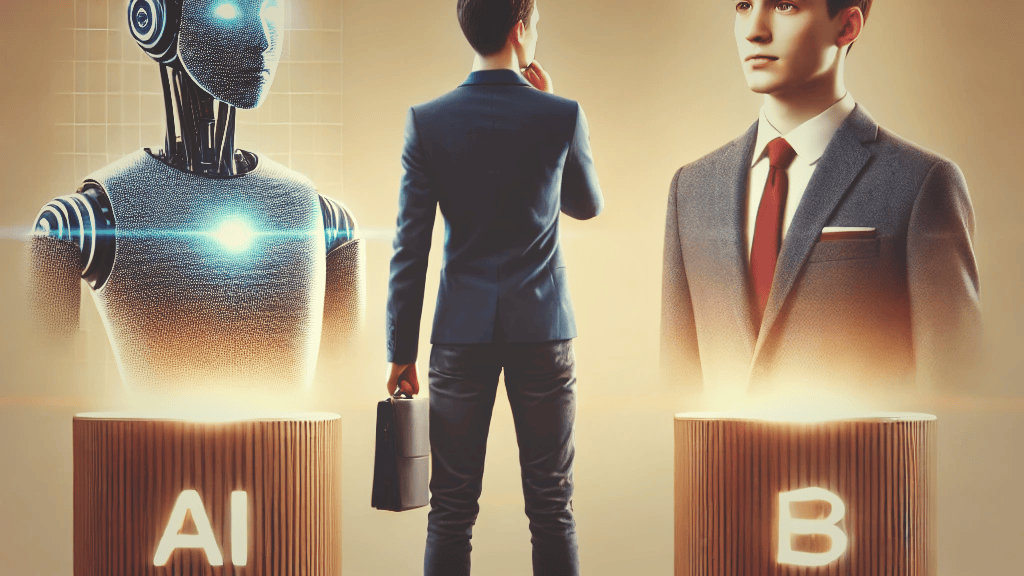
Artificial intelligence has transformed the way people work, unlocking new levels of productivity, efficiency, and accessibility to information. However, this revolution has also blurred the lines between genuine expertise and surface-level knowledge. AI-powered tools make it easier than ever for individuals to present themselves as knowledgeable on subjects they barely understand, devaluing true experts and creating confusion about who actually holds deep knowledge in a given field.

The Rise of AI-Assisted Imposters

AI chatbots and large language models can generate well-structured, seemingly informed responses on virtually any topic. This accessibility gives users the ability to quickly obtain information without spending years studying or working in a field. While this can be a powerful productivity boost, it also enables a new breed of imposters, people who appear knowledgeable simply because they can effectively prompt an AI model.

This phenomenon can be particularly problematic in areas where expertise is critical, such as medicine, engineering, law, and scientific research. Someone who knows how to phrase a question effectively in an AI chatbot might sound as if they have deep knowledge, yet they lack the fundamental understanding to evaluate or challenge the information they receive. This illusion of expertise creates a false sense of confidence, leading to potential misinformation and poor decision-making.

The Devaluation of True Experts

As AI-generated content becomes more prevalent, the value of human experts diminishes in the eyes of many. If an AI can summarize complex ideas in seconds, why spend years developing mastery over a subject? This mindset ignores the irreplaceable depth and nuance that true experts bring to their fields.

Expertise is not merely about regurgitating facts; it involves deep comprehension, critical thinking, and the ability to analyze complex situations in ways AI cannot. Experts can recognize when something “seems off” in a dataset, challenge flawed methodologies, and offer insights that go beyond pre-existing knowledge. When AI is seen as a replacement rather than a tool for experts, we risk sidelining the very people who push innovation forward.

The Blurred Line Between Prompters and Professionals

The ability to use AI tools effectively is a skill in itself, but it is not the same as expertise in a given field. In a world where AI can generate professional-grade reports, legal summaries, or even medical diagnoses, distinguishing between a true expert and a skilled AI user becomes increasingly difficult.

A medical professional who relies on AI to assist with diagnoses still needs years of experience to interpret results correctly. A legal expert who uses AI to draft contracts must understand the intricacies of the law to ensure accuracy and ethical considerations. In contrast, someone without this background may produce superficially impressive work that lacks critical depth, leading to costly or even dangerous errors.

The Value of Real Experts in an AI-Driven World

Despite the challenges AI presents, the role of real experts remains more important than ever. AI is a powerful tool, but it is only as good as the data it is trained on, and it lacks human intuition, ethical reasoning, and the ability to innovate beyond established patterns. True experts provide:

  1. Deep Understanding – Unlike AI-generated responses, human expertise is built on years of study, experience, and critical analysis.
  2. Ability to Challenge AI – Experts can recognize biases, errors, and limitations in AI-generated content, ensuring accuracy and reliability.
  3. Innovation – While AI can process existing information, true breakthroughs come from human creativity and critical thinking.
  4. Accountability – Professionals in medicine, law, and science are held to ethical and professional standards that AI simply cannot meet.

So you want to make a game for mobile…

Posted by admin on March 11, 2025
Articles, Games / No Comments

Mobile gaming continues to dominate the industry, with billions of players engaging in games on smartphones and tablets. Choosing the right game engine is crucial for optimizing performance, graphics, and overall user experience. Whether you’re an indie developer or part of a large studio, the right engine can significantly impact your development process. Here are some of the best game engines for mobile game development in 2025.

Unity

Pros:

  • Cross-platform support (iOS, Android, and more)
  • Large asset store with pre-made assets, scripts, and tools
  • Extensive community support and documentation
  • Powerful 2D and 3D capabilities
  • Supports AR and VR development

Cons:

  • Can be resource-intensive, especially for larger projects
  • Licensing costs for professional developers

Unity is one of the most popular game engines for mobile game development, known for its versatility and ease of use. With its extensive asset store, built-in physics engine, and C# scripting, Unity allows developers to create both simple and complex mobile games efficiently.

Unreal Engine

Pros:

  • High-quality graphics with realistic lighting and effects
  • Blueprint system allows for visual scripting (no coding required)
  • Free to use, with a royalty model for commercial success
  • Strong support for 3D mobile games

Cons:

  • Steeper learning curve than some other engines
  • Heavier on system resources, making it less ideal for simple mobile games

Unreal Engine, developed by Epic Games, is known for delivering high-fidelity graphics and powerful real-time rendering capabilities. While it is widely used for AAA console and PC games, it is also a solid choice for high-quality mobile games, particularly in the action and RPG genres.

Godot

Pros:

  • Open-source and completely free
  • Lightweight and efficient
  • Built-in node-based system simplifies game development
  • Great for 2D game development

Cons:

  • Smaller community compared to Unity and Unreal
  • Fewer third-party assets and plugins

Godot has been gaining traction among indie developers due to its simplicity and open-source nature. It supports both 2D and 3D development and uses the GDScript language, which is similar to Python. This engine is an excellent choice for developers who want full control over their project without worrying about licensing fees.

Cocos Creator (Cocos2d)

Pros:

  • Optimized for 2D mobile game development
  • Lightweight and performs well on mobile devices
  • JavaScript and TypeScript support
  • Free and open-source

Cons:

  • Limited 3D capabilities
  • Smaller community compared to Unity

Cocos Creator is an excellent engine for developers focusing on 2D games. Many successful mobile games, including “Clash of Kings” and “Idle Heroes,” were built using Cocos2d. It offers a streamlined workflow and high performance for mobile devices.

Buildbox

Pros:

  • No coding required
  • Drag-and-drop interface
  • Ideal for beginners and non-programmers
  • Quick prototyping and development

Cons:

  • Limited customization compared to code-based engines
  • Subscription-based pricing model

Buildbox is designed for game developers who want to create mobile games without prior programming knowledge. Its drag-and-drop interface makes it one of the easiest engines to use, though it may not be as powerful as Unity or Unreal for more complex projects.

Solar2D (formerly Corona SDK)

Pros:

  • Lua-based scripting is easy to learn
  • Fast and efficient for 2D mobile games
  • Free and open-source

Cons:

  • Limited 3D capabilities
  • Smaller community support

Solar2D is a great choice for developers who prefer a lightweight engine focused on 2D game development. It allows for rapid prototyping and has been used for successful mobile games like “Fun Run.”


DEWATOGEL


DEWATOGEL