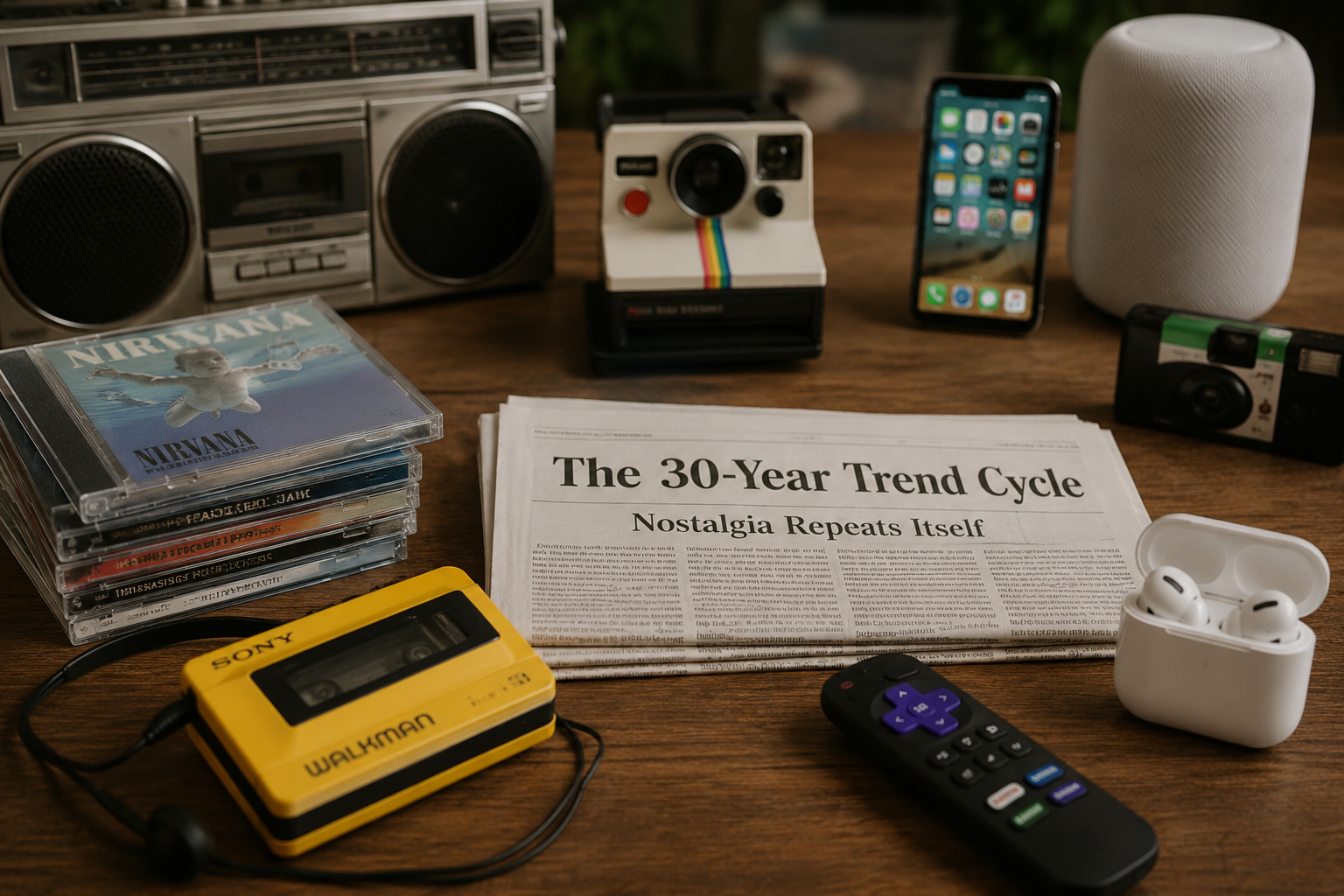
You know how every year something you loved as a kid comes around. A sitcom you used to watch gets a reboot. A band you thought had broken up sells out three nights at the arena. A movie from 35 years ago has the opening weekend of the summer. A video game you played on a TV in 1997 is now available in 4K. You buy it without thinking twice.
This is not a coincidence. It is a system with a rhythm that can be measured. An engine that can be predicted. A business model that is very safe. Nostalgia is no longer something that brands stumble upon. It is a strategy that they plan for.
For people who work in media, music, games or consumer products understanding how Nostalgia works is very important. It is a tool that can be used to forecast what will be popular. So let us break it down.
The Pendulum a.k.a. Why Culture Runs on a 30-Year Clock
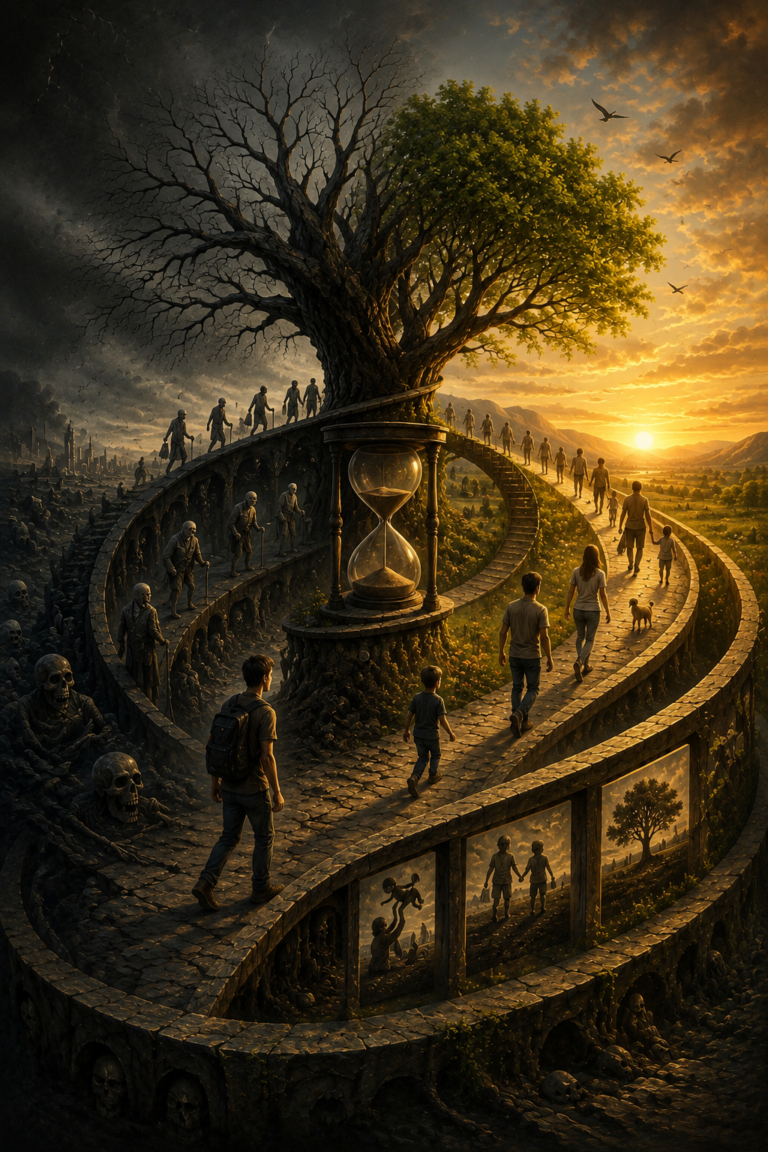
The best way to think about Nostalgia is to imagine a pendulum. Pop culture does not move in a line towards things. It swings back and forth. The swing is very consistent: 30 years.
This makes sense when you think about who has the power to make decisions in any given decade. The people who are in charge of making movies, programming radio stations, designing games and signing checks are usually in their 30s and 40s. The things they loved when they were kids are now 25 to 35 years old. When they get to the top of their industry they look back to their childhood for inspiration. This is why culture often mirrors itself a generation later.
That is why the 2010s were full of things from the 1980s. Why the early 2000s brought back the 1970s. Why we are now seeing a lot of things from the 1990s and early 2000s come back. The TV show Stranger Things is an example: it was made by people who were kids in the 1980s. It is set in the 1980s.. It was marketed to people who were old enough to remember the 1980s and young enough to discover them as something new.
There is a cycle that applies to trends, especially fashion and aesthetics. This cycle is often 20 years. The two cycles run together. We will come back to why they move at speeds. But the basic idea is the same: something has to go for a while before it can be brought back.
The 15-Year and The Mainstream Peak
If the full Nostalgia cycle is 30 years. The gap between when something’s popular and when it can be revived is about 15 years. This is one of the things to understand about Nostalgia.
Something that is 5 years old is not Nostalgia. It just seems old and out of date. If you wait 15 years. Something strange happens. The same thing stops being embarrassing. Starts being charming. It goes from being “outdated” to “retro”. This is the launch window for Nostalgia. It’s why a trend feels safe to revive at a moment and not before.
The first wave of revival hits the people who lived through it. Then if the property is popular enough. It builds towards a mainstream peak. This is the point where the Nostalgia audience is joined by a public. Including people who never experienced the original but adopt it as a discovered aesthetic. The peak is where the money is. It’s why a movie like Top Gun: Maverick can make $1.4 billion 36 years after the original.
The trick is to time the launch to the gap and ride it to the peak. You do not want to arrive too late.
The Generational Push
The engine that drives all of this is what I call the push. This is the moment when a generation gets economic power to bring its childhood back into the mainstream.
Gen X did this in the 2000s and early 2010s. Reviving the 1970s and early 1980s. Millennials are doing it now. They are a powerful group. They are large. They are good with technology. They are finally making a lot of money. They are the people making the content and the people buying it. When the same generation controls both supply and demand. The cycle becomes self-reinforcing.
This is why Nostalgia revivals often feel emotionally precise than cynical. The creators genuinely loved the source material. The audience genuinely grew up with it. The transaction works because both sides are sincere.
Disposable Adult Money or The Real Fuel
Here is the part that people often leave out. Nostalgia is not powerful because it is emotional. It is powerful because emotion is attached to a wallet.
The defining feature of the Nostalgia consumer is that they are an adult with income who is buying back their childhood. A kid in 1995 had no money and total emotional investment. That same person at 40 has a mortgage, a salary and an unprotected soft spot for the things they could not afford as a kid. That gap between childhood desire and adult purchasing power is the business.
This is why the modern collectibles market is so big. Old video games have sold for sums of money. It’s why a premium “anniversary edition” with a steel case and an art book outsells the version. It’s why reunion tours and Vegas residencies are some of the products in entertainment. The product being sold is not the music. It’s the memory. The memory has been appreciating in value for decades.
You can call it the Nostalgia premium. People will reliably pay more for a connection than for something better. They will feel good doing it.
The Internet Broke the Clock. Micro-Nostalgia and Over-Saturation
For most of the century the 30-year cycle held because culture had to disappear to be missed. Songs stopped being played on the radio. Movies stopped being shown in theaters. They were hard to see. Games went out of print. Absence created longing and longing created demand.
The internet destroyed that scarcity. In doing so it broke the clock.
Today nothing disappears. Streaming keeps every catalog forever. Every song, show and game ever made is a search. When the past never leaves Nostalgia stops being a wave. Becomes an ambient continuous condition. We do not miss things to revive them. We just keep them open in a tab.
This has produced two phenomena. The first is micro-Nostalgia: Nostalgia for things that’re barely old at all. We now see people longing for the early 2010s internet. For 2014 Tumblr. For the generation of YouTube. For Vine. The 15-year gap is collapsing towards five years. Sometimes fewer. People are Nostalgic for aesthetics that’re still technically current.
The second is over-saturation. Algorithms can bring anything back instantly. A song from 1985 can re-enter the charts in a week because a streaming series used it in a key scene. A decades-old song can become a phenomenon overnight. The upside is revivals. The downside is that when everything can be revived at any time. Nothing accumulates the scarcity that made revival feel special. Nostalgia becomes noise.
The strategic implication is that the predictable 30-year cycle still governs property and major franchises.. On top of it now sits a chaotic compressed layer of micro-cycles that can ignite or burn out in days. Modern operators have to play both clocks at once.
Different Clocks: Fashion vs. Music and Movies
Not everything moves at the speed. The difference is interesting.
Fashion runs fast and shallow. It has a roughly 20-year cycle. It is getting faster. The Y2K revival is an example: low-rise jeans, baby tees and early 2000s silhouettes came hard. Driven by Gen Z teenagers who never wore them the first time. This is a distinction. Fashion revivals do not require the generation to be in power. They are reinterpretive. Youth-led. Young people adopt the look of a decade they never lived through. Fashion can recycle quickly because it carries financial weight per item. Thrives on ironic playful reinterpretation.
Music and film revivals run slower and deeper. They tend to require the generation that lived through the original. The revenue model depends on authenticity and on monetizing existing relationships: reunion tours, remasters, sequels, legacy sequels. You can revive a fashion silhouette in 15 years. Reviving a film franchise convincingly usually takes a generational turn. Because the audience has to have aged into both the money and the longing.
This is why fashion feels chaotic and disposable. While a movie like Blade Runner 2049 or Dune feels like an event decades in the making.
The Catalog: Revivals Across the Decades
The pattern is everywhere once you see it
You can see this pattern in film franchises and legacy sequels. The Star Wars prequels came out about 22 years after the Star Wars. Then the sequels came out about 38 years later under ownership. Jurassic World came out 22 years after Jurassic Park. Top Gun: Maverick came out 36 years later. Blade Runner 2049 came out 35 years after the Blade Runner in 1982. Beetlejuice came back 36 years later. The numbers are around that 30-year mark.
Dad sitcoms and comfort TV reboots are also part of this pattern. Full House became Fuller House. That ’70s Show became That ’90s Show. Frasier and Will & Grace and Roseanne all came back. The Friends reunion was a deal on streaming. These shows are all about warmth and familiarity. They are like comfort food for people who want to feel like they are wrapped in a childhood blanket.
Cult classics are also part of this pattern. Twin Peaks came back as The Return. Cobra Kai brought back The Karate Kid from 1984. It became one of the hits, on streaming. This was an example of a 30-year revival that brought back the cast and introduced the story to a new generation. Cult properties are very valuable because the fans are so loyal and dedicated.
Music is a part of this thing that is happening. The vinyl record is popular again because of the vinyl revival. Synthwave and retrowave music brought back the sounds of the 1980s. Mainstream pop music started using ideas. One of the music albums was named to show that it was looking back at the past. The 2000s pop-punk music came back. It was popular again. Music is special because it can bring back memories instantly. Music is a thing that can make us remember things from a long time ago. Music is something that people love. It can bring back memories of the past.
Retro video games are also a part of this. Nintendo made a lot of money from games with the NES and SNES Classic Mini consoles. They sold games in a new package. Sony and Sega did the thing with their old consoles. Now it is common for game companies to remake and remaster old games. Games like Final Fantasy VII Remake and the Resident Evil remakes and Crash Bandicoot and Spyro remasters and Tony Hawks Pro Skater 1+2 and Diablo II: Resurrected are all part of this trend. There are also new games that look like old games from a long time ago like Shovel Knight and Stardew Valley and Celeste that are very popular.
The plan for businesses is simple.
For people who own businesses the opportunities are clear.
- Mine the things you already own like music and games.
- Old music and games have people who already like them. It is easier to sell them again.
- This is why companies make versions of old music and games.
- The people who like them are already there waiting to buy them.
Make versions of old music and games. It is cheaper to make them than to make something. There are already people who want to buy them. You can sell the feeling of nostalgia in a way.
Sell versions of old music and games to people who want to pay more for them. These people are adults who have money and want to buy things. They want to pay for the upgrade.
Make experiences, not just old products. Concerts and special events can make nostalgia into something that people will pay a lot of money for.
Bring back brands. Old things like cameras and handheld games can be popular again when the people who used to like them have money to spend.
There are risks to this plan. If companies make many new versions of old things people can get tired of them. If every old thing is being remade it is not special anymore.
The past is very valuable now
Nostalgia works because it is a mix of feelings and money. It is where peoples memories meet their money. This cycle happens over and over so companies can plan for it. The past is something that people love. It is something that companies can use to make money.
The past is the one thing that gets more valuable, over time. It is the one product that companies can rely on to make money. Companies are not waiting for nostalgia to happen they are planning for it. They are watching the calendar. Making new versions of old things when the time is right.
About The Author