

Skip to content

Karios

Tech news

Support me 1

Gaming History Podcast (GR)

  • Gaming History – Επεισόδιο 26 – Psygnosis
  • Gaming History – Επεισόδιο 25 – Doom
Primary Menu
  • Home
  • Books
  • Shop
    • Browse Shop
    • Cart
    • Checkout
    • Orders
    • Account details
    • Lost password
  • Articles
    • All Articles
    • Games
    • DIY
    • Retro
  • Gaming History Podcast (GR)
  • Contact me
  • News

NASA is blowing stuff up to study the explosive potential of methalox rockets

admin Posted on 7 months ago 2 minutes read
NASA is blowing stuff up to study the explosive potential of methalox rockets

​”We put fuel in a rocket, blow it up in a remote location, and measure how big the boom is.” 

For more than 60 years, nearly every large rocket used some combination of the same liquid and solid propellants. Refined kerosene was favored for its easy handling and non-toxicity, hydrazine for its storability and simplicity, hydrogen for its efficiency, and solid fuels for their long shelf life and rapid launch capability.

About 15 years ago, rocket companies started serious development of large methane-fueled engines. SpaceX and Blue Origin now build the most powerful of these new engines—the Raptor and BE-4—each capable of generating more than half a million pounds of thrust. SpaceX’s Starship rocket and its enormous booster are powered by 39 Raptors, while Blue Origin’s New Glenn and United Launch Alliance’s Vulcan rockets use a smaller number of BE-4s on their booster stages.

Burning methane in combination with liquid oxygen, these “methalox” engines have several advantages. Methane is better suited for reusable engines because they leave less behind sooty residue than kerosene, which SpaceX uses on the Falcon 9 rocket. Methane is easier to handle than liquid hydrogen, which is prone to leaks and must be stored at staggeringly cold temperatures of around minus 423 degrees Fahrenheit (minus 253 degrees Celsius). Methane is also a cryogenic liquid, but it has a warmer temperature closer to that of liquid oxygen, between minus 260 and minus 297 degrees Fahrenheit (minus 162 to minus 183 degrees Celsius).

Read full article

Comments

 Ars Technica – All content Read More

About The Author

admin

See author's posts

Post navigation

Previous: Crypto.com Cuts 12% of Workforce, Targets Roles That ‘Do Not Adapt’ to AI
Next: Perseverance’s radar revealed ancient subsurface river delta on Mars

Related

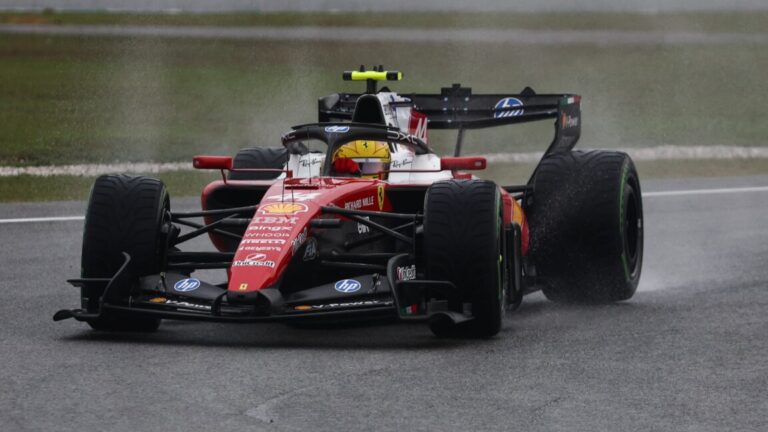
F1 in Bahrain... in Malaysia: The race needed a software update to start
  • News

F1 in Bahrain… in Malaysia: The race needed a software update to start

admin Posted on 3 hours ago
Mass quarantine issued in Russia after unexplained death of plague researcher
  • News

Mass quarantine issued in Russia after unexplained death of plague researcher

admin Posted on 4 hours ago
AI glasses face their first major government crackdown
  • News

AI glasses face their first major government crackdown

admin Posted on 5 hours ago

Listen on Apple Music

You may have missed

F1 in Bahrain... in Malaysia: The race needed a software update to start
  • News

F1 in Bahrain… in Malaysia: The race needed a software update to start

admin Posted on 3 hours ago
Mass quarantine issued in Russia after unexplained death of plague researcher
  • News

Mass quarantine issued in Russia after unexplained death of plague researcher

admin Posted on 4 hours ago
AI glasses face their first major government crackdown
  • News

AI glasses face their first major government crackdown

admin Posted on 5 hours ago
Explaining Hall-effect, TMR, and other new types of "mechanical" switches
  • News

Explaining Hall-effect, TMR, and other new types of “mechanical” switches

admin Posted on 8 hours ago

If you are located in Europe, you can buy my new sci-fi fantasy book “Ground Zero” directly from me for a better price than Amazon.