

Skip to content

Karios

Tech news

Support me 1

Gaming History Podcast (GR)

  • Gaming History – Επεισόδιο 28 – Το Κραχ του 1983
Primary Menu
  • Home
  • Books
  • Shop
    • Browse Shop
    • Cart
    • Checkout
    • Orders
    • Account details
    • Lost password
  • Articles
    • All Articles
    • Games
    • DIY
    • Retro
  • Gaming History Podcast (GR)
  • Contact me
  • News

Inside Amazon’s robotic arms race and what it means for the future of human work

admin Posted on 2 days ago 2 minutes read
Inside Amazon’s robotic arms race and what it means for the future of human work

​The second-largest corporate employer has bet big on robot workers to scale. 

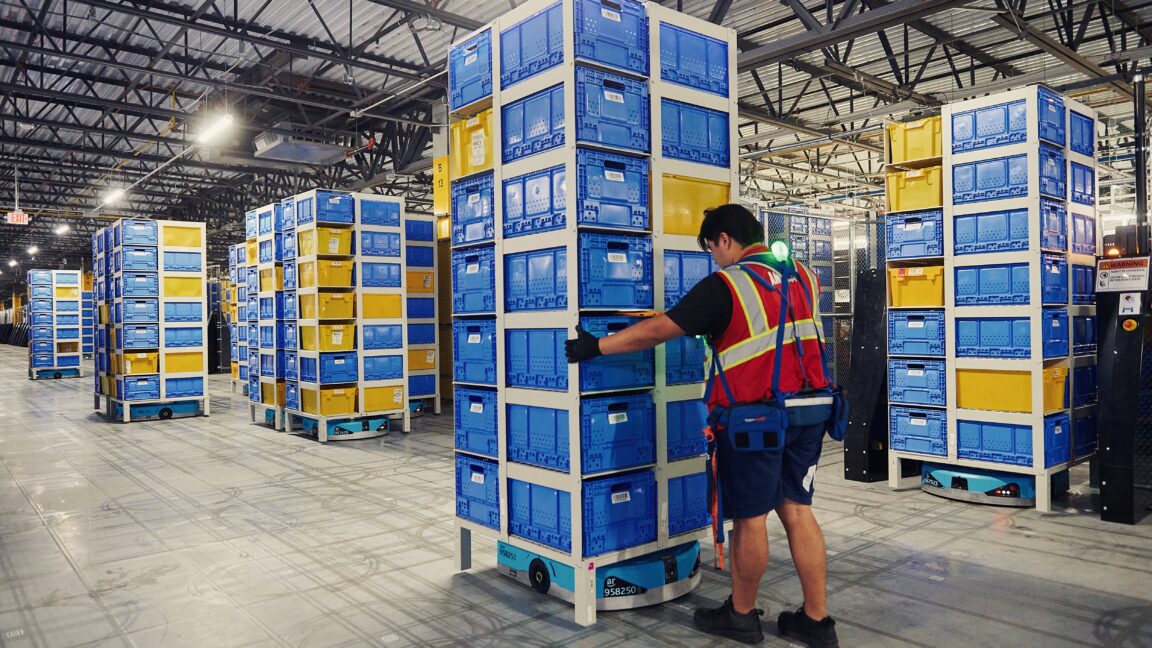
No organization in the world operates more robots than Amazon. The company already has more than 1 million robots working in warehouses around the clock to make tens of millions of same-day and one-day package deliveries happen on a daily basis—and Amazon is poised to significantly grow that robotic fleet in the coming years as it establishes new factories to churn out increasingly more capable robot workers.

Despite deploying so many robots, Amazon is also the second-largest corporate employer in the world, with more than 1.5 million full-time and part-time human workers, according to its 2025 annual report. Amazon executives say that the growing robot fleet has eased the burden on its human workforce by taking on the toughest fulfillment center tasks that carry the greatest risks of physical fatigue and injury. But labor advocacy groups and independent researchers point to evidence suggesting that warehouse automation driven by AI is not all upside for the humans who work alongside robots.

“For the last 100 years, most of the automation that we’ve seen usually happens away from workers—you’re taking that high-risk task away from the worker, and you’re doing so in a way that is not physically proximate,” Brian Greenwood, professor of business at George Mason University, told Ars. “The rise of collaborative robots really changes that dynamic for two reasons: one is that it is physically proximate, and two, the robot has the ability to dictate the pace of work.”

Read full article

Comments

 Ars Technica – All content Read More

About The Author

admin

See author's posts

Post navigation

Previous: Review: 4-hour Musk documentary feels like two different films
Next: Get HostDeal for $119.97 and Give Every New Website Somewhere to Go

Related

Anthropic warns small AI models could self-replicate through IoT devices
  • News

Anthropic warns small AI models could self-replicate through IoT devices

admin Posted on 2 hours ago
technews
  • News

Apple TV 4K Four-HomePod Surround Sound: Compatible Speakers and Total Cost

admin Posted on 2 hours ago
technews
  • News

Bitdeer Secures 67 MW for Nvidia AI in Malaysia, but No Customer Deal Announced

admin Posted on 2 hours ago

Listen on Apple Music

You may have missed

Anthropic warns small AI models could self-replicate through IoT devices
  • News

Anthropic warns small AI models could self-replicate through IoT devices

admin Posted on 2 hours ago
technews
  • News

Apple TV 4K Four-HomePod Surround Sound: Compatible Speakers and Total Cost

admin Posted on 2 hours ago
technews
  • News

Bitdeer Secures 67 MW for Nvidia AI in Malaysia, but No Customer Deal Announced

admin Posted on 2 hours ago
technews
  • News

AI Guardrails: How They Work and Where Protection Can Fall Short

admin Posted on 2 hours ago

If you are located in Europe, you can buy my new sci-fi fantasy book “Ground Zero” directly from me for a better price than Amazon.