Skip to content

Karios

Tech news

Support me 1

Gaming History Podcast (GR)

  • Gaming History – Επεισόδιο 22 – 3037/2002
  • Gaming History – Επεισοδιο 21 – Playstation 1
Primary Menu
  • Home
  • Books
  • Articles
  • Games
  • DIY
  • Retro
  • Gaming History Podcast (GR)
  • Contact me
  • News

AI won’t replace radiologists, but it will dramatically change their jobs

admin Posted on 2 days ago 2 minutes read
AI won’t replace radiologists, but it will dramatically change their jobs

​A pioneering AI scientist once predicted computers would replace human radiologists. They haven’t. 

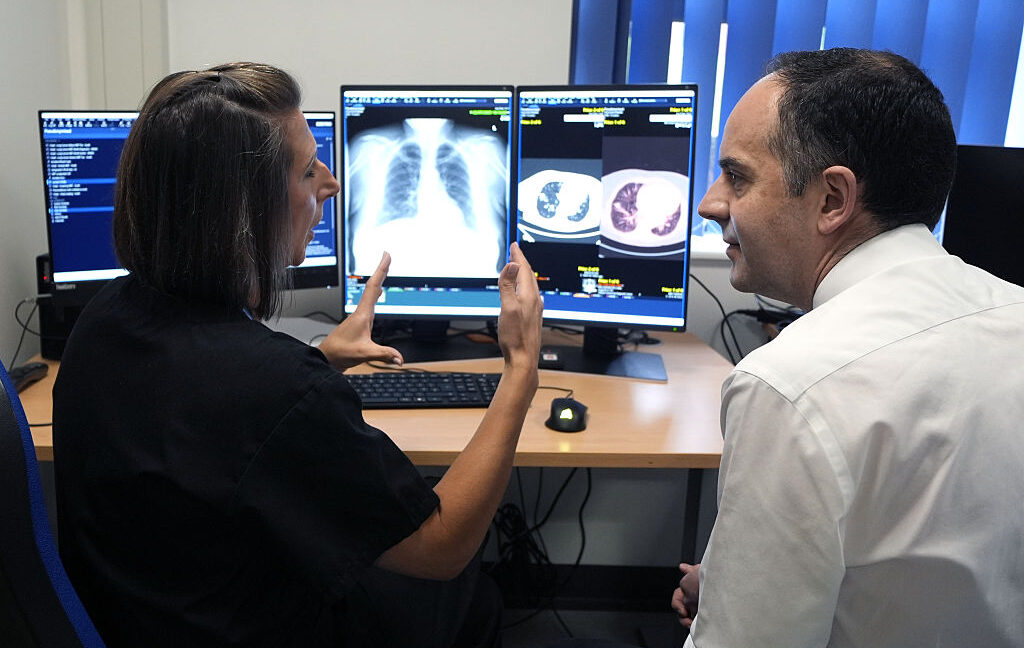
In 2016 Geoffrey Hinton, the Nobel-winning “godfather of AI,” predicted that radiologists—the physicians who read X-rays, ultrasounds, and other images to help make medical diagnoses—would find themselves replaced by computers within five years. Today the field can retort by quoting Mark Twain’s famous quip: The report of my death was an exaggeration.

Radiology’s ranks are in fact growing steadily, with the number of practitioners expected to expand by 26 percent or more over the next three decades. But what Hinton may have missed about the dynamics of the job market should not obscure his prescience: He was correct that human physicians now have a silicon-based colleague in the room that matches or exceeds their performance. In fact, radiology is far and away medicine’s hot spot for AI, making it a bellwether for the adoption of expert decision-making systems across healthcare and perhaps in other fields.

As of early 2026, about three-quarters of the 1,400 AI-enabled medical devices cleared by the Food and Drug Administration were for radiology. Some make physicians more efficient by drafting reports or alerting them to the images that urgently need attention. But other AI tools have the potential to improve on human performance by identifying abnormalities that may not be visible to the human eye, or interpreting images as well as—and sometimes better than—trained radiologists. For example, an analysis of 43 clinical trials concluded that AI-assisted colonoscopies reveal more polyps than conventional ones.

Read full article

Comments

 Ars Technica – All content Read More

About The Author

admin

See author's posts

Post navigation

Previous: Microsoft Exchange Server SE CU1 Delayed Amid AI-Assisted Security Reviews
Next: Microsoft Teams’ New Policy Lets Admins Automatically Block Meeting Bots

Related

Court blocks Trump FCC order that could flood broadcast TV with more election ads
  • News

Court blocks Trump FCC order that could flood broadcast TV with more election ads

admin Posted on 17 hours ago
technews
  • News

Life360’s $8 Pet Tag vs Pet GPS: What Each One Does

admin Posted on 17 hours ago
Researchers get two genetic codes to work at the same time
  • News

Researchers get two genetic codes to work at the same time

admin Posted on 17 hours ago

Listen on Apple Music

You may have missed

Court blocks Trump FCC order that could flood broadcast TV with more election ads
  • News

Court blocks Trump FCC order that could flood broadcast TV with more election ads

admin Posted on 17 hours ago
technews
  • News

Life360’s $8 Pet Tag vs Pet GPS: What Each One Does

admin Posted on 17 hours ago
Researchers get two genetic codes to work at the same time
  • News

Researchers get two genetic codes to work at the same time

admin Posted on 17 hours ago
technews
  • News

Pixel Phones Get Motion Assist: What Android 17 Users Should Know

admin Posted on 18 hours ago