

Skip to content

Karios

Tech news

Support me 1

Gaming History Podcast (GR)

  • Gaming History – Επεισόδιο 32 – Atari Jaguar
Primary Menu
  • Home
  • Books
  • Shop
    • Browse Shop
    • Cart
    • Checkout
    • Orders
    • Account details
    • Lost password
  • Articles
    • All Articles
    • Games
    • DIY
    • Retro
  • Gaming History Podcast (GR)
  • Contact me
  • News

RIP social media. What comes next is messy.

admin Posted on 7 months ago 2 minutes read
RIP social media. What comes next is messy.

​As social media splinters, how can we keep the new online spaces from devolving into toxic pits of despair? 

Last fall, we featured an extensive interview with Petter Törnberg of the University of Amsterdam, who studies the underlying mechanisms of social media that give rise to its worst aspects: the partisan echo chambers, the concentration of influence among a small group of elite users (attention inequality), and the amplification of the most extreme divisive voices. He wasn’t optimistic about social media’s future.

Törnberg’s research showed that, while numerous platform-level intervention strategies have been proposed to combat these issues, none are likely to be effective. And it’s not the fault of much-hated algorithms, non-chronological feeds, or our human proclivity for seeking out negativity. Rather, the dynamics that give rise to all those negative outcomes are structurally embedded in the very architecture of social media. So we’re probably doomed to endless toxic feedback loops unless someone hits upon a brilliant fundamental redesign that manages to change those dynamics.

Törnberg has been very busy since then, producing two new papers and one new preprint building on this realization that social media is structured quite differently than the physical world, with unexpected downstream consequences. The first new paper, published in PLoS ONE, specifically focused on the echo chamber effect, using the same combined standard agent-based modeling with large language models (LLMs)—essentially creating little AI personas to simulate online social media behavior.

Read full article

Comments

 Ars Technica – All content Read More

About The Author

admin

See author's posts

Post navigation

Previous: Report: SpaceX IPO gives Musk unchecked power and forbids investor lawsuits
Next: Apple’s $250M Siri Settlement Could Pay Eligible iPhone Buyers

Related

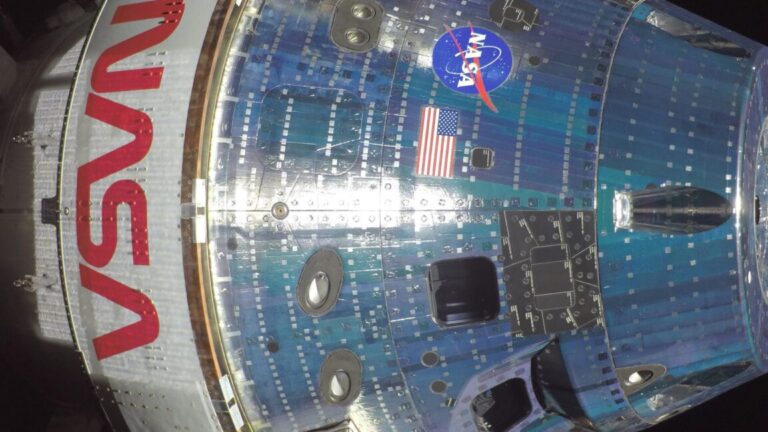
NASA's new Moon plans have a problem: Orion wasn't designed to fly this way
  • News

NASA’s new Moon plans have a problem: Orion wasn’t designed to fly this way

admin Posted on 52 minutes ago
How to tell a cyberattack from a plain old outage
  • News

How to tell a cyberattack from a plain old outage

admin Posted on 3 hours ago
Ted Cruz-led committee approves Trump FCC nominee 15-0 as Democrats boycott vote
  • News

Ted Cruz-led committee approves Trump FCC nominee 15-0 as Democrats boycott vote

admin Posted on 15 hours ago

Listen on Apple Music

You may have missed

NASA's new Moon plans have a problem: Orion wasn't designed to fly this way
  • News

NASA’s new Moon plans have a problem: Orion wasn’t designed to fly this way

admin Posted on 52 minutes ago
How to tell a cyberattack from a plain old outage
  • News

How to tell a cyberattack from a plain old outage

admin Posted on 3 hours ago
Ted Cruz-led committee approves Trump FCC nominee 15-0 as Democrats boycott vote
  • News

Ted Cruz-led committee approves Trump FCC nominee 15-0 as Democrats boycott vote

admin Posted on 15 hours ago
Ukraine blew up Putin’s bridge using relay drones to bypass Starlink limits
  • News

Ukraine blew up Putin’s bridge using relay drones to bypass Starlink limits

admin Posted on 15 hours ago

If you are located in Europe, you can buy my new sci-fi fantasy book “Ground Zero” directly from me for a better price than Amazon.